

In a recent airline accident that attracted substantial coverage in the traveler industry as well as the industry experts, the Delta Airlines Flight DL275 was diverted to the Los Angeles International Airport (LAX) after an in-flight emergency occurred. The plane heading to Tokyo Haneda Airport (HND) was in the process of making a flight after having been in Detroit Metropolitan Wayne County Airport (DTW) when it was compelled to make an unexpected landing to avoid endangering the lives of the passengers and the crew.
Although this kind of diversion is rare, it is important to note that the decision is indicative of how much Delta abides by the safety procedures and how important the decisions of pilots are in contemporary aviation.
What Went on DL275? The Incident.
The flight, FL275, was on a long trans-Pacific flight on one of the most modernized wide-body aircrafts known as Airbus A350-900 but it is one of the aircrafts that Delta is flying. The flight departed Detroit ahead of schedule and flew well in the following few hours. Nevertheless, during the flight, the cockpit crew was informed of a technical issue of the anti-ice system of the engines that is one of the key safety measures and makes sure that no ice can be formed on the engine surfaces in the conditions of high altitude and low temperatures.
However, since the plane was not yet flying over a diversion airport, as it was flying in the North Pacific it was apparent that it was a precaution measure and hence the flight crew assessed the situation and diverted the flight to Los Angeles International Airport, one of the working hubs of Delta. This alternative availed the facilities of high maintenance and safe and controlled landing environment.
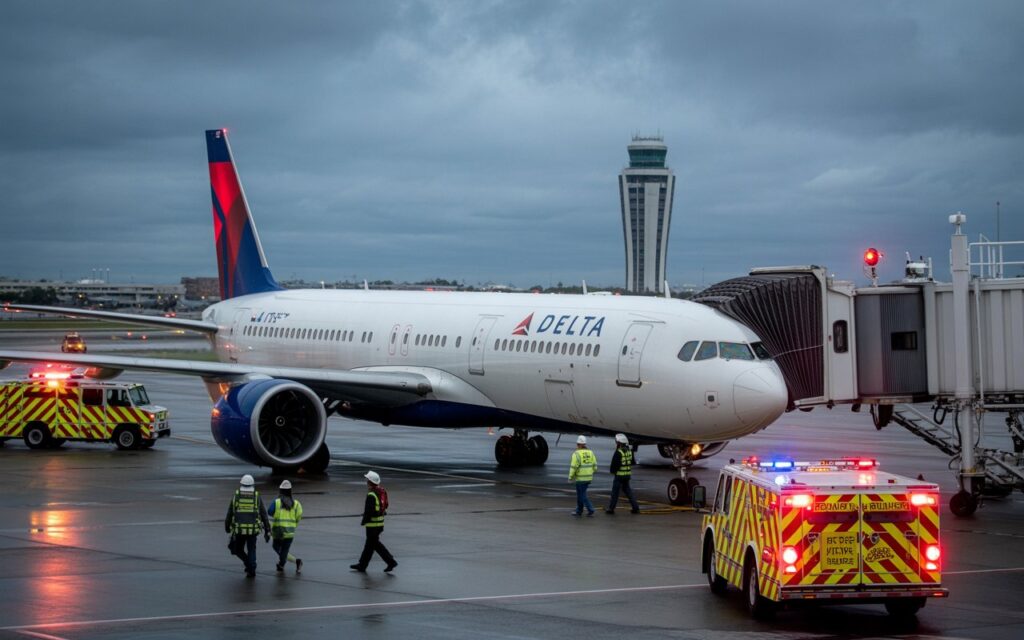
The aircraft was able to land successfully in LAX wherein emergency services were on high alert as a normal procedure. Fortunately, no passengers or the crew members told of injuries.
Technical Background: Technical knowledge of the Anti-Ice System.
The anti-ice of the engine is necessary in making sure that the performance of the engine is not influenced during cold weather. The moisture can also be frozen on engine components at elevation and this can lead to interruption in airflow, propulsion loss or engine stalling. The system uses hot air, which is bled off the engine, to prevent the formation of ice.
Failure of this system is not as disastrous at that moment but can be highly hazardous unless addressed without delay especially during a long trans-oceanic flight when they are under ETOPS (Extended-range Twin-engine Operational Performance Standards). According to the rules of ETOPS, the twin engine airplanes should not exceed a certain distance of the diversion airports so as to ensure that their landing in the event of an emergency is always safe.
In the current situation, heading towards Tokyo would have put the aircraft further out of the suitable replacements. The move of the crew to make the diversion was also prudent besides being within the international guidelines of aircraft safety.
Why Los Angeles Was Chosen for Diversion
Some aviation observers questioned why the aircraft diverted to Los Angeles instead of airports geographically closer to its route, such as Anchorage or Seattle. However, the decision to choose LAX was based on several operational and logistical factors:
- Maintenance Infrastructure: Delta maintains extensive maintenance and engineering facilities at LAX, equipped to handle wide-body aircraft such as the Airbus A350.
- Runway Capability: LAX has long runways suitable for large international aircraft and emergency landings.
- Passenger Handling: The airport offers full international arrival capabilities, including customs and immigration processing.
- Operational Hub: As one of Delta’s key West Coast bases, diverting to LAX allowed the airline to provide swift passenger assistance and facilitate onward travel arrangements.
These considerations demonstrate how airline operations prioritize not just proximity but also the availability of technical and logistical support.
Passenger and Crew Response
According to the passengers of flight DL275, the situation was managed professionally and calmly. The flight deck crew came with timely updates, as they said that there was a mechanical problem and an unscheduled landing was necessary. Cabin crew members were calm and kept the passengers updated and reassured during the incident.
On arrival, safe deplaning and accommodation or rebooking were offered to passengers. Delta personnel were also available at LAX to help with the logistics like meal vouchers, stay at hotels, and alternative flights to Tokyo Haneda.
The company responded with a statement that it is thankful that its crew was very professional and patients tolerable yet stated that the number one priority at Delta Air Lines is safety.
Operational and Financial Implications
Long-range international flights diverted are expensive to run in terms of operations and cost. In the case of Delta, the accident might have caused further burn of fuel, landing and handling charges, aircraft maintenance as well as logistical costs involved in rebooking and paying passengers.
Moreover, these events may momentarily interfere with the schedule of the fleet and crew allocation of the airline. Large-body planes such as A350 are usually operating on narrow rotation schedules and therefore an eleventh-hour emergency diversion can spread to other flights in the network.
In spite of such expenses, the choice of Delta to focus on safety is in line with the high safety culture in the company and its image as one of the most dependable airlines in the world.
Industry and Safety Expert Views.
Their rapid and cautious decision-making has received hails as the safety system by the aviation safety experts. In contemporary aviation, the safety accidents seldom develop into an emergency state because of the thorough training, real-time monitoring of the systems and the thoroughly trained emergency plans.
As experts also report, the effective management of this flight also speaks to the strength of Delta safety management system, as well as highly sophisticated flight monitoring technology of Airbus. The onboard sensors and diagnostic systems in the aircraft were able to give the pilots the right information on time, which facilitated a controlled response.