
Introduction
In today’s fast-paced and highly competitive business environment, consistency, efficiency, and quality control are essential for success. This is where Standard Operating Procedures (SOPs) play a crucial role. SOPs are structured, written instructions designed to help organizations perform routine tasks efficiently and consistently. Whether you are running a startup, managing a corporate department, or operating a manufacturing unit, SOPs ensure that every process is executed correctly every time.
This comprehensive guide explores everything you need to know about Standard Operating Procedures, including their importance, types, benefits, and how to create effective SOPs that can help your business rank higher in operational excellence—and even support your SEO strategy.
What Are Standard Operating Procedures?
Standard Operating Procedures (SOPs) are detailed, step-by-step instructions that outline how to perform specific tasks or processes within an organization. They serve as a roadmap for employees, ensuring that work is carried out consistently, safely, and in compliance with company standards.
SOPs are used across various industries such as healthcare, manufacturing, IT, marketing, and finance. From onboarding new employees to handling customer service requests, SOPs provide clarity and reduce ambiguity.
Importance of SOPs in Business
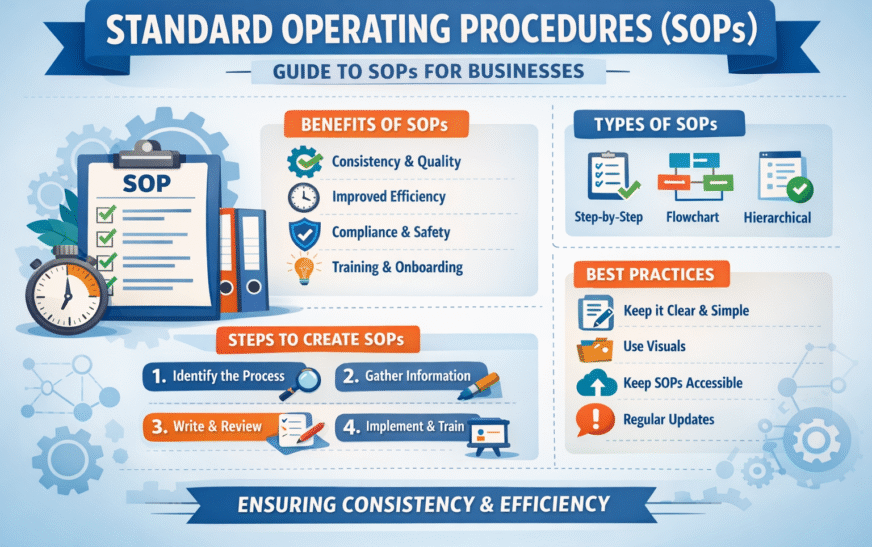
1. Consistency and Quality Control
SOPs ensure that tasks are performed uniformly, reducing variability in outcomes. This leads to consistent product quality and service delivery.
2. Improved Efficiency
By following predefined steps, employees can complete tasks faster without needing constant supervision or clarification.
3. Training and Onboarding
SOPs act as training documents for new hires, helping them understand processes quickly and reducing training time.
4. Compliance and Risk Management
Many industries require strict adherence to regulations. SOPs help ensure compliance with legal and safety standards, minimizing risks.
5. Scalability
As your business grows, SOPs make it easier to replicate processes across teams and locations without losing quality.
Types of Standard Operating Procedures
Different organizations use various formats depending on their needs. The most common types include:
1. Step-by-Step SOPs
These provide detailed instructions in a sequential format, ideal for routine tasks.
2. Hierarchical SOPs
These include main steps followed by sub-steps, useful for complex processes.
3. Flowchart SOPs
Visual representations of processes, perfect for decision-based tasks.
4. Checklist SOPs
Simple lists used to ensure that all required steps are completed.
Key Components of an Effective SOP
A well-structured SOP should include the following elements:
- Title Page: Clearly states the procedure name
- Purpose: Explains why the SOP is needed
- Scope: Defines where and when the SOP applies
- Responsibilities: Identifies who is responsible for each task
- Procedure: Step-by-step instructions
- Tools and Resources: Required equipment or software
- Safety Guidelines: Any precautions to follow
- Revision History: Tracks updates and changes
Benefits of Implementing SOPs
1. Enhanced Productivity
Employees spend less time figuring out how to perform tasks and more time executing them efficiently.
2. Reduced Errors
Clear instructions minimize mistakes and improve accuracy.
3. Better Communication
SOPs eliminate confusion by providing a single source of truth for processes.
4. Knowledge Retention
Important information stays within the organization even if employees leave.
5. Improved Customer Satisfaction
Consistent service delivery leads to better customer experiences and trust.
How to Create Effective SOPs
Creating SOPs requires careful planning and execution. Follow these steps:
Step 1: Identify the Process
Determine which tasks need documentation. Focus on repetitive or critical processes.
Step 2: Define Objectives
Clearly state what the SOP aims to achieve.
Step 3: Gather Information
Consult team members, observe workflows, and collect relevant data.
Step 4: Choose the Format
Select a format (step-by-step, checklist, or flowchart) based on the complexity of the process.
Step 5: Write Clear Instructions
Use simple, concise language. Avoid jargon and ensure each step is easy to follow.
Step 6: Review and Test
Have team members test the SOP to ensure accuracy and clarity.
Step 7: Implement and Train
Introduce the SOP to your team and provide proper training.
Step 8: Update Regularly
Review SOPs periodically to keep them relevant and effective.
Best Practices for SOP Implementation
- Keep It Simple: Avoid unnecessary complexity
- Use Visuals: Include diagrams or screenshots where helpful
- Ensure Accessibility: Store SOPs in a centralized, easily accessible location
- Encourage Feedback: Allow employees to suggest improvements
- Regular Updates: Keep SOPs aligned with current practices
Common Mistakes to Avoid
- Writing overly complicated instructions
- Failing to update SOPs regularly
- Ignoring employee feedback
- Not providing proper training
- Creating SOPs but not enforcing them
SOPs and SEO: A Strategic Advantage
While SOPs are primarily operational tools, they can also support your SEO strategy. For example:
- Content Standardization: SOPs ensure consistent formatting and keyword usage across blog posts
- Quality Control: Helps maintain high-quality content, which improves search rankings
- Efficiency in Publishing: Streamlines content creation and publishing workflows
- Team Collaboration: Ensures all writers and editors follow the same guidelines
By implementing SOPs for content creation, businesses can improve their chances of ranking higher on search engines like Google.
Real-World Applications of SOPs
- Healthcare: Patient care protocols and safety procedures
- Manufacturing: Production processes and quality checks
- IT कंपनies: System maintenance and troubleshooting guides
- Marketing Teams: Content creation and campaign management workflows
- Customer Support: Handling queries and complaints
Conclusion
Standard Operating Procedures (SOPs) are the backbone of efficient and scalable business operations. They provide clarity, improve productivity, and ensure consistency across all processes. Whether you are managing a small business or a large enterprise, investing time in creating and maintaining SOPs can significantly enhance your operational performance.
By following best practices and continuously updating your procedures, you can build a strong foundation for long-term success. Moreover, integrating SOPs into your content and marketing workflows can give you an added advantage in achieving better SEO results and higher Google rankings.
FAQs
What is the main purpose of SOPs?
The main purpose is to ensure consistency, efficiency, and quality in performing tasks.
How often should SOPs be updated?
SOPs should be reviewed and updated regularly, ideally every 6–12 months.
Are SOPs only for large organizations?
No, SOPs are beneficial for businesses of all sizes.
Can SOPs improve employee performance?
Yes, they provide clear guidance, reducing confusion and improving productivity.