

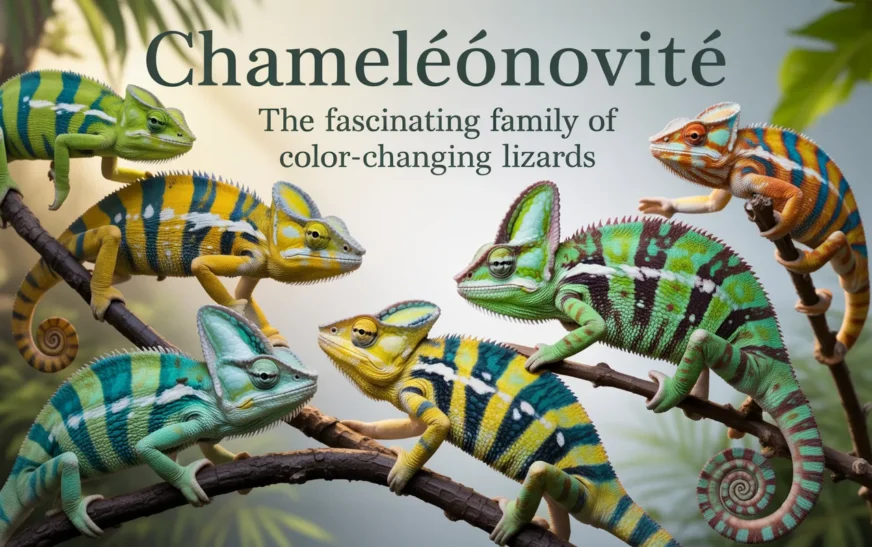
The chameleónovité are among the most remarkable reptiles on Earth. Known for their unique ability to change color, independently moving eyes, and long projectile tongues, these creatures have fascinated scientists, nature enthusiasts, and wildlife photographers for centuries. Belonging to the biological family Chamaeleonidae, chameleons are a specialized group of lizards adapted to life in trees and shrubs across parts of Africa, Europe, the Middle East, and Asia.
This article provides a comprehensive overview of chameleónovité, including their classification, physical characteristics, habitat, behavior, diet, reproduction, and conservation status.
What Are Chameleónovité?
The term chameleónovité refers to the reptile family Chamaeleonidae, which contains more than 200 species of chameleons. These reptiles are primarily found in Madagascar, Africa, southern Europe, and parts of Asia. Madagascar alone hosts nearly half of all known chameleon species, making it the global hotspot for these fascinating reptiles.
Chameleons belong to the order Squamata, the same order that includes snakes and other lizards. However, their specialized anatomy and behavior make them distinct from most other reptiles.
Unique Physical Characteristics
1. Color-Changing Ability
The most famous feature of chameleónovité is their ability to change color. Contrary to popular belief, chameleons do not primarily change color for camouflage. Instead, color changes occur due to:
- Communication with other chameleons
- Regulation of body temperature
- Expression of mood or stress
- Courtship and mating displays
Their skin contains specialized pigment cells called chromatophores, which allow them to shift colors rapidly depending on environmental and emotional conditions.
2. Independently Moving Eyes
Another fascinating trait is their independent eye movement. Each eye can rotate and focus separately, allowing the chameleon to observe two different directions simultaneously. When prey is detected, both eyes focus forward to judge distance accurately.
This remarkable vision gives chameleons nearly 360-degree awareness of their surroundings, making them excellent hunters.
3. Long Projectile Tongue
Chameleons possess one of the most extraordinary hunting tools in the animal kingdom. Their tongue can extend more than twice the length of their body to capture prey. The tongue moves extremely fast—often reaching its target in less than a tenth of a second.
This rapid strike helps them catch insects such as:
- Crickets
- Grasshoppers
- Beetles
- Flies
Some larger species may even eat small birds or other lizards.
4. Zygodactylous Feet
Chameleónovité have specialized feet designed for climbing. Their toes are grouped into two opposing bundles, forming a gripping structure that helps them hold branches securely.
Combined with a prehensile tail, this adaptation allows them to move easily through trees and vegetation.
Habitat and Distribution
Chameleons live in diverse environments, but most species prefer warm climates with vegetation. Their habitats include:
- Tropical rainforests
- Mountain forests
- Savannahs
- Semi-desert regions
The largest diversity of species occurs in Madagascar, while other species inhabit mainland Africa, parts of the Middle East, southern Spain, and western India.
Some well-known species include:
- Panther chameleon
- Veiled chameleon
- Jackson’s chameleon
Each species has adapted to specific environmental conditions within its habitat.
Behavior and Lifestyle
Chameleons are generally solitary animals. They prefer living alone and may become aggressive if another chameleon enters their territory. Males are especially territorial and will display bright colors or inflate their bodies to intimidate rivals.
Daily Activity
Most chameleons are diurnal, meaning they are active during the day and rest at night. They spend much of their time slowly moving through vegetation, carefully scanning their environment for insects.
Their slow movement helps them remain unnoticed by predators such as birds and snakes.
Diet and Feeding Habits
The diet of chameleónovité mainly consists of insects. They are considered insectivores, although larger species may occasionally eat small vertebrates.
Common food sources include:
- Crickets
- Locusts
- Moths
- Butterflies
- Grasshoppers
Chameleons rely heavily on their excellent eyesight and rapid tongue projection to capture prey. Unlike many reptiles that chase their food, chameleons are ambush predators.
They remain still and strike only when prey comes within range.
Reproduction and Life Cycle
Reproduction among chameleónovité varies by species, but most chameleons reproduce through egg laying.
Mating
Male chameleons display vibrant colors to attract females. Courtship involves:
- Body inflation
- Bright color displays
- Slow rhythmic movements
If the female is receptive, mating occurs. If not, she may display darker colors to signal rejection.
Egg Laying
Many species lay between 10 and 40 eggs in soil or sand. The incubation period can range from four months to over a year, depending on species and environmental conditions.
Some species, such as Jackson’s chameleon, give birth to live young instead of laying eggs.
Importance in the Ecosystem
Chameleons play an important role in maintaining ecological balance. As insect predators, they help control insect populations that could otherwise damage crops or spread diseases.
They also serve as prey for birds, snakes, and mammals, making them a valuable part of the food chain.
In regions such as Madagascar, chameleons contribute to biodiversity and are considered indicators of environmental health.
Threats and Conservation
Despite their fascinating adaptations, many chameleon species face serious threats.
Habitat Loss
Deforestation and urban development are destroying natural habitats, especially in Madagascar and parts of Africa.
Illegal Wildlife Trade
Chameleons are often captured for the exotic pet trade, which can significantly reduce wild populations.
Climate Change
Changes in temperature and rainfall patterns affect the ecosystems where chameleons live.
Organizations like the International Union for Conservation of Nature monitor many species and classify some as endangered or vulnerable.
Conservation efforts focus on habitat protection, sustainable wildlife management, and regulating international trade.
Chameleons as Pets
Some chameleon species are kept as exotic pets, especially:
- Veiled chameleon
- Panther chameleon
However, they require specialized care, including:
- Proper temperature and humidity levels
- UVB lighting
- A diet of live insects
- Adequate climbing space
Because they are sensitive animals, they are recommended only for experienced reptile keepers.
Interesting Facts About Chameleónovité
Here are some surprising facts about chameleons:
- Their tongues can accelerate faster than many sports cars.
- Some species are only a few centimeters long, while others grow over 60 cm.
- Their eyes can move independently but focus together when hunting.
- Color changes often reflect communication rather than camouflage.
- They have a prehensile tail that acts like a fifth limb.
Conclusion
The chameleónovité are one of the most extraordinary reptile families in the animal kingdom. With their color-changing skin, independent eyes, lightning-fast tongues, and tree-climbing abilities, chameleons represent a remarkable example of evolutionary adaptation.
Found mainly in Madagascar and Africa, these reptiles play a vital role in maintaining ecological balance. However, habitat loss and wildlife trade threaten many species, making conservation efforts increasingly important.
Understanding and protecting chameleons not only preserves their unique beauty but also supports the biodiversity of the ecosystems they inhabit.